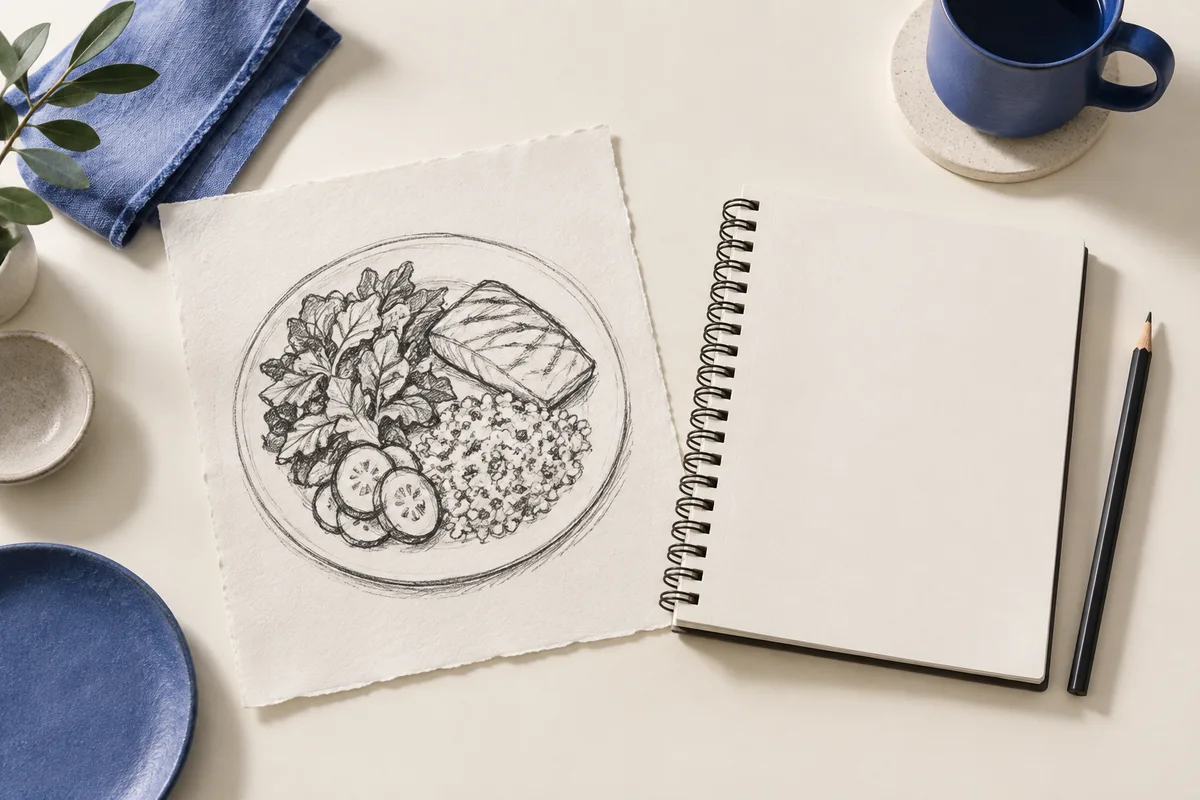
Describe the food and portion first. Add energy information only when useful, and identify whether it came from a label, a recipe, or an estimate.
Start with the description
If all you remember is “sandwich from the café,” preserve that rather than selecting a precise-looking database entry that may not match. A text note is still information.
The free log makes calorie amounts optional. You can use it as a meal record without setting a calorie target or grading your food choices.
Use estimates that look like estimates
Write “about,” “roughly,” or a simple range in the notes when you do not know the portion. Avoid implying that an app can measure an unweighed meal exactly.
When a current label is available, keep the product and portion details so you can trace the number. If a recipe changes, update the record rather than reusing an old entry without checking.
Lunch: café sandwich, portion not weighed. Ingredients partly known. Energy left blank. This is a more honest record than borrowing an exact value from a different sandwich.
Check the record before interpreting it
Look for duplicated meals, missing drinks, and entries copied from the wrong date. These are record-quality issues that you can correct without judging the meal.
If you share a summary, state whether you recorded every day or selected days. An incomplete log should not be presented as a complete measure of intake.
Choose a level of detail that supports you
If tracking makes eating feel distressing or compulsive, pause and seek qualified support. A log should serve a practical purpose agreed with you, not become a test you must pass.
BiteSync is the companion food-tracking app. Check its current listing for features and pricing; the browser log remains free and does not prescribe a diet.
Sources & checks
- FDA: understanding the Nutrition Facts label ↗
Label quantities are tied to serving size. Daily Values are general references, not personalized prescriptions.
- Current App Store listing: Calorie Counter - BiteSync ↗
Checks the companion app’s stated features and its limitations; not independent evidence of health benefits.
Checked against these sources on 2026-09-20. The worked examples and record layouts are original illustrations. They are not real patient records or evidence of treatment effectiveness. This is educational content, not individual medical advice or a clinician-reviewed treatment plan.
Our editorial process · Suggest a correction